The Hijrah to Madinah is one of the most significant journeys in Islamic history. It was not simply a journey from one city to another. It was a journey of faith, sacrifice, courage, patience and complete trust in Allah.
When the Muslims faced severe opposition and persecution in Makkah, Allah opened a path for them to establish their faith and community in Madinah. The Prophet Muhammad ﷺ eventually made the journey with his beloved companion Abu Bakr (رضي الله عنه), leaving behind his homeland and beginning a new chapter in the history of Islam.
The story of the Hijrah continues to inspire Muslims around the world. It teaches us that difficult journeys can lead to beautiful beginnings, and that when a believer places their trust in Allah while taking the necessary steps, even the most challenging circumstances can become a path toward something greater.
What Does Hijrah Mean?
The Arabic word Hijrah means migration or leaving one place for another. In Islamic history, the Hijrah specifically refers to the migration of the Prophet Muhammad ﷺ and his Companions from Makkah to Madinah.
Before the Prophet ﷺ himself migrated, a number of Muslims had already travelled to Madinah. According to a narration in Sahih al-Bukhari, the Prophet ﷺ had been shown in a dream the place to which the Muslims would migrate, described as a land of date palms between two rocky areas. Abu Bakr (رضي الله عنه) prepared to migrate but waited when the Prophet ﷺ told him that he hoped to receive permission to migrate as well.
The migration eventually became a turning point for the Muslim community.
Why Did the Muslims Migrate From Makkah?
The early Muslims in Makkah experienced great hardship because of their belief in Islam. The message of worshipping Allah alone challenged the religious and social order of the Quraysh, and many believers faced opposition.
For the Muslims, remaining in Makkah became increasingly difficult. Madinah offered an opportunity for Muslims to practise their faith and establish a community where Islam could develop openly.
The Hijrah therefore involved enormous sacrifice. The Muhajirun—the emigrants from Makkah—left behind homes, possessions, businesses, families and familiar surroundings for the sake of Allah.
Their migration reminds us that faith is sometimes tested through what we are willing to leave behind.
The Prophet Muhammad ﷺ and Abu Bakr (رضي الله عنه)
When permission came for the Prophet ﷺ to leave Makkah, Abu Bakr (رضي الله عنه) was honoured with accompanying him.
A narration recorded in Sahih al-Bukhari describes how Abu Bakr had prepared two riding camels for the journey. When the Prophet ﷺ told him that he had been given permission to leave, Abu Bakr said that he would accompany him. The Prophet ﷺ accepted one of the camels only after agreeing to pay its price.
This detail offers an important glimpse into the preparation behind the journey.
The Hijrah was an act of complete reliance upon Allah, but it was not careless or unplanned. Provisions were prepared, transportation was arranged and a guide was hired.
This teaches us an important principle:
Tawakkul—trusting Allah—does not mean abandoning practical effort.
A Muslim can plan carefully while knowing that the final outcome is always in Allah's hands.
The Journey to the Cave of Thawr
During the journey, the Prophet ﷺ and Abu Bakr (رضي الله عنه) stayed in the Cave of Thawr for three nights.
Their preparations involved several people. Abdullah ibn Abi Bakr (رضي الله عنه) would gather information in Makkah and bring it to them at night. Amir ibn Fuhayrah (رضي الله عنه) helped provide milk. A trusted guide was also arranged to lead them onward after their stay in the cave. These details are recorded in Sahih al-Bukhari.
The story demonstrates that the Hijrah involved both spiritual trust and practical planning.
The Prophet ﷺ did not simply set out without preparation. He took appropriate means while relying upon Allah.
That is a valuable lesson for anyone facing a major change in life.
“Do Not Grieve; Indeed, Allah Is With Us”
One of the most powerful moments of the Hijrah is mentioned directly in the Qur’an.
Allah says:
“Do not grieve; indeed Allah is with us.”
This statement appears in Surah At-Tawbah when Allah describes the Prophet ﷺ as one of two in the cave after being driven out by those who disbelieved.
Abu Bakr (رضي الله عنه) later narrated that while they were in the cave, he became concerned that if the people searching for them looked down, they might see them. The Prophet ﷺ reassured him.
Imagine the circumstances: they had left their homeland, they were being pursued, and they were hiding in a cave.
Yet the Prophet ﷺ remained firm.
The lesson is timeless:
When circumstances seem frightening, a believer's strength comes from knowing that Allah is near and that nothing happens outside His knowledge and wisdom.
Leaving Makkah Behind
For the Muhajirun, migration meant leaving behind the place where they had lived for years.
Makkah was their home. Their families, businesses, memories and belongings were there.
Yet they chose faith over comfort.
This is why the Hijrah is not simply a historical journey. It is also a story about priorities.
Sometimes moving forward requires leaving something behind.
That does not necessarily mean physically leaving a city. It may mean leaving behind a harmful habit, an unhealthy environment, a sinful practice or anything that prevents a person from drawing closer to Allah.
The deeper lesson is about sincerity: What are we willing to sacrifice for the sake of Allah?
Arrival in Madinah
The arrival in Madinah marked the beginning of a remarkable new chapter.
The people of Madinah who supported the Prophet ﷺ and welcomed the emigrants became known as the Ansar, meaning the Helpers. The Muslims who migrated from Makkah became known as the Muhajirun, meaning the emigrants.
The relationship between these two groups became one of the most beautiful examples of brotherhood in Islamic history.
The Qur’an praises the people of Madinah for their attitude toward those who migrated to them:
“They love those who emigrated to them and find not any want in their breasts of what the emigrants were given but give them preference over themselves, even though they are in privation.”
The Ansar did not simply tolerate the Muhajirun.
They welcomed them.
They supported them.
They cared for them.
Their generosity became part of the legacy of Madinah.
Muhajirun and Ansar: A Lesson in Brotherhood
The Hijrah transformed more than the lives of those who migrated. It created a new model of community.
The Muhajirun demonstrated sacrifice.
The Ansar demonstrated generosity.
Together, they showed that a strong Muslim community is built not only through individual faith but also through mutual support.
For Muslims today, this is an important reminder.
When someone is new to a community, travelling from another country, starting a new life or going through a difficult transition, they need more than information. They need kindness, support and a sense of belonging.
The spirit of the Ansar remains a powerful example.
The Love of Madinah
Madinah holds a special place in the hearts of Muslims around the world.
It was the city that welcomed the Prophet ﷺ and the Muhajirun. It became the home of the Muslim community and a centre from which Islam spread.
The Prophet ﷺ himself supplicated for Madinah, asking Allah to make the believers love it as they loved Makkah or even more, and asking Allah to bless its measures of food. This supplication is recorded in Sahih al-Bukhari.
For Muslims who visit Madinah today, the experience can therefore feel deeply personal and spiritual.
Walking through the city can bring to mind the sacrifices of the Companions and the extraordinary events that shaped Islamic history.
What Can We Learn From the Hijrah?
The Hijrah offers lessons that remain relevant more than fourteen centuries later.
1. Trust Allah During Difficult Times
The Prophet ﷺ and Abu Bakr (رضي الله عنه) faced an extremely uncertain journey.
Yet the Qur’an preserves the Prophet's words:
“Indeed, Allah is with us.”
This is a reminder that fear does not mean a person has lost faith. A believer can experience fear while still placing complete trust in Allah.
2. Take Practical Steps
The Hijrah involved careful planning.
Transportation was arranged. A guide was hired. Information was gathered. Provisions were prepared.
This teaches us that tawakkul and preparation belong together.
We should make the best decisions available to us and then leave the outcome to Allah.
3. Sacrifice Can Lead to a New Beginning
The Muhajirun left behind many things they loved.
Yet their sacrifice became part of one of the greatest chapters in Islamic history.
Sometimes a new beginning requires courage to leave something familiar.
4. Support Those Who Are Starting Again
The Ansar provide an extraordinary example of hospitality and generosity.
Their attitude teaches us to welcome people rather than judge them for what they have lost.
5. Faith Is More Valuable Than Comfort
The Hijrah demonstrates that material comfort is not the ultimate measure of success.
The Companions were willing to sacrifice worldly possessions for their faith.
Their story encourages Muslims to consider what truly matters.
Is Hijrah to Madinah Still Required Today?
This is an important distinction.
The Hijrah of the Prophet ﷺ and his Companions from Makkah to Madinah was a specific historical event. After the conquest of Makkah, the Prophet ﷺ explained that the earlier form of migration to Madinah was no longer required in the same way. Sahih al-Bukhari records that those who migrated before the conquest had already received the special status and privileges associated with that migration.
Sahih Muslim also contains a chapter explaining the meaning of the statement that there is no Hijrah after the conquest.
Therefore, Muslims should not describe moving to Madinah today as being the same religious obligation as the original Hijrah.
However, the spiritual lessons of Hijrah remain highly relevant.
Leaving sin, turning toward Allah, making sincere changes and striving to live a life of obedience are all powerful ways to carry the spirit of Hijrah into our own lives.
Visiting Madinah Today
For many Muslims, visiting Madinah is a lifelong dream.
A visit allows pilgrims to experience a city deeply connected to the life of the Prophet Muhammad ﷺ and the early Muslim community.
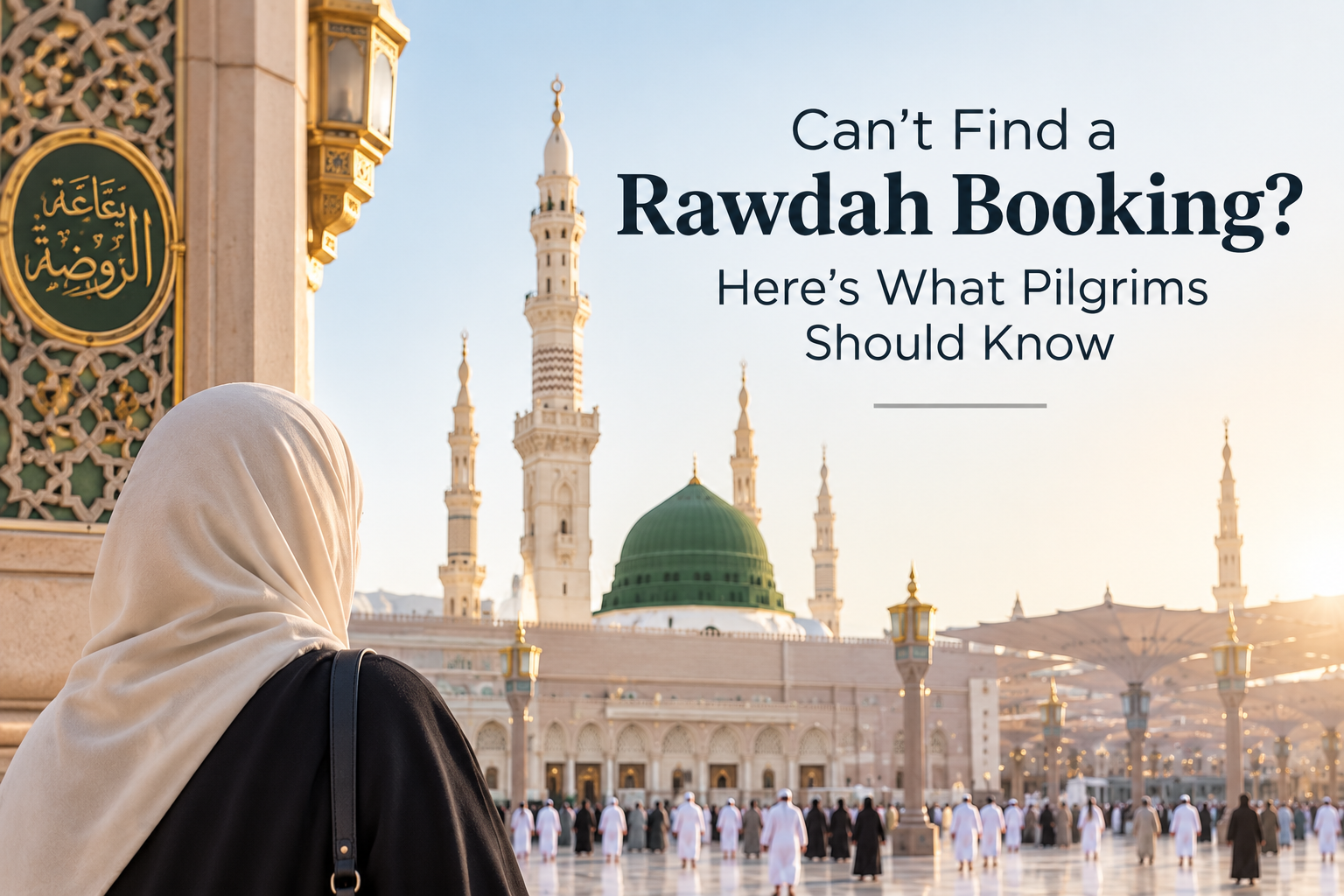
One of the most important places in Madinah is Al-Masjid an-Nabawi, the Prophet's Mosque. Muslims come from around the world to pray there, send salutations upon the Prophet ﷺ and reflect on the history of the city.
A visit to Madinah can become even more meaningful when travellers take time to learn about its history before arriving.
Instead of simply seeing buildings and landmarks, visitors can walk through the city remembering the people who sacrificed everything for their faith.
They can remember the Muhajirun who left Makkah.
They can remember the Ansar who opened their homes and hearts.
They can remember the Prophet ﷺ and his mission.
And they can reflect on what Hijrah means in their own lives.
Making Your Visit to Madinah More Meaningful
Before travelling to Madinah, consider learning about:
- The Hijrah from Makkah
- The life of the Prophet ﷺ in Madinah
- The Muhajirun and Ansar
- The establishment of the Muslim community
- The significance of Masjid an-Nabawi
- The major events of the Madinan period
- The manners and etiquette of visiting the Prophet's Mosque
Preparing spiritually can transform a trip from simply being a holiday or pilgrimage into a deeply meaningful experience.
When you understand the history behind the places you visit, you see them differently.
The Hijrah: A Journey That Still Speaks to Us
The journey from Makkah to Madinah happened many centuries ago, but its message has never become old.
The Hijrah teaches us about courage when life becomes difficult.
It teaches us about sacrifice when faith demands a difficult choice.
It teaches us about planning when facing uncertainty.
It teaches us about friendship through the companionship of Abu Bakr (رضي الله عنه).
It teaches us about generosity through the Ansar.
And above all, it teaches us about trusting Allah.
The Hijrah was a physical journey, but its deepest lessons are spiritual.
Every Muslim faces moments when they must decide whether to remain where they are or take a step toward something better. Sometimes that step is leaving a habit. Sometimes it is changing our priorities. Sometimes it is making sincere tawbah. Sometimes it is simply deciding to become closer to Allah.
The journey may look different for each person.
But the lesson remains:
When the destination is pleasing to Allah, take the step with sincerity, make the necessary effort, and place your trust in Him.
Experience the Spirit of Madinah
For Muslims around the world, visiting Madinah is more than travelling to another city. It is an opportunity to connect with a place that played an extraordinary role in the history of Islam.
The story of the Hijrah gives that journey deeper meaning.
As you walk through Madinah, remember the people who arrived there with little more than their faith. Remember the community that welcomed them. Remember the Prophet ﷺ and the companions who built a new chapter of Islamic history.
May Allah grant every Muslim who dreams of visiting Madinah the opportunity to experience its beauty, pray in Masjid an-Nabawi and return home with renewed faith and a heart filled with gratitude.
Madinah is not simply a destination. For millions of Muslims, it is a place connected to love, faith, history and the memory of the Prophet Muhammad ﷺ.
Final Reflection
The Hijrah began with uncertainty but led to a new beginning.
It began with sacrifice but became a source of strength.
It involved leaving home but resulted in the building of a community.
And at its heart was a simple, powerful message of faith:
“Indeed, Allah is with us.”
That message continues to comfort Muslims today.
Whether we are travelling across countries, beginning a new chapter in life, facing difficulties or simply trying to become better Muslims, the story of Hijrah reminds us that sincere faith, purposeful effort and trust in Allah can guide us through even the most challenging journeys.